Sinking paving and surface runoff
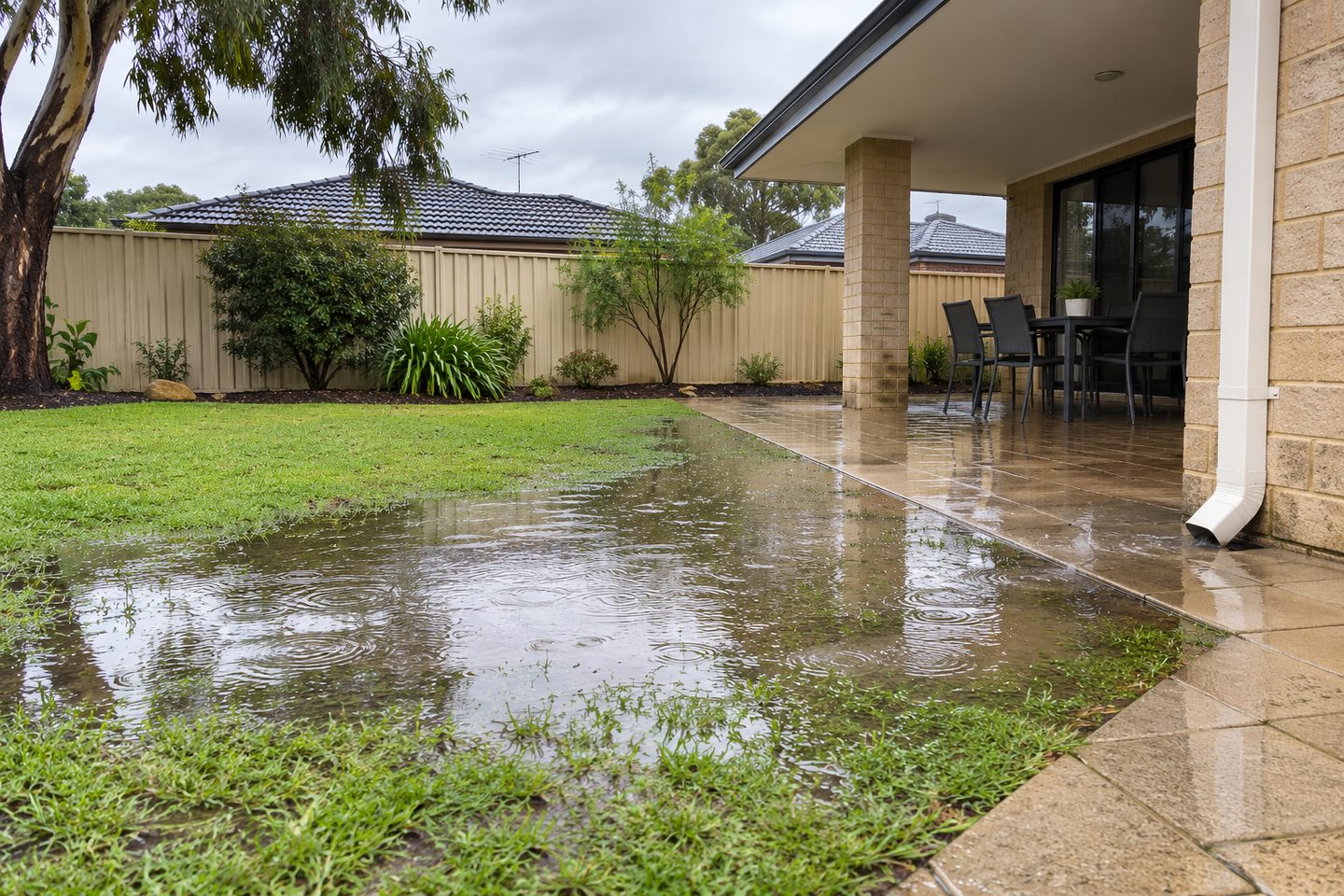
Perth, Western AustraliaFor sinking paving and surface runoff, check both the paving fall and the buried drainage route. A dip in paving alters the surface route and may also hint at a buried fault.
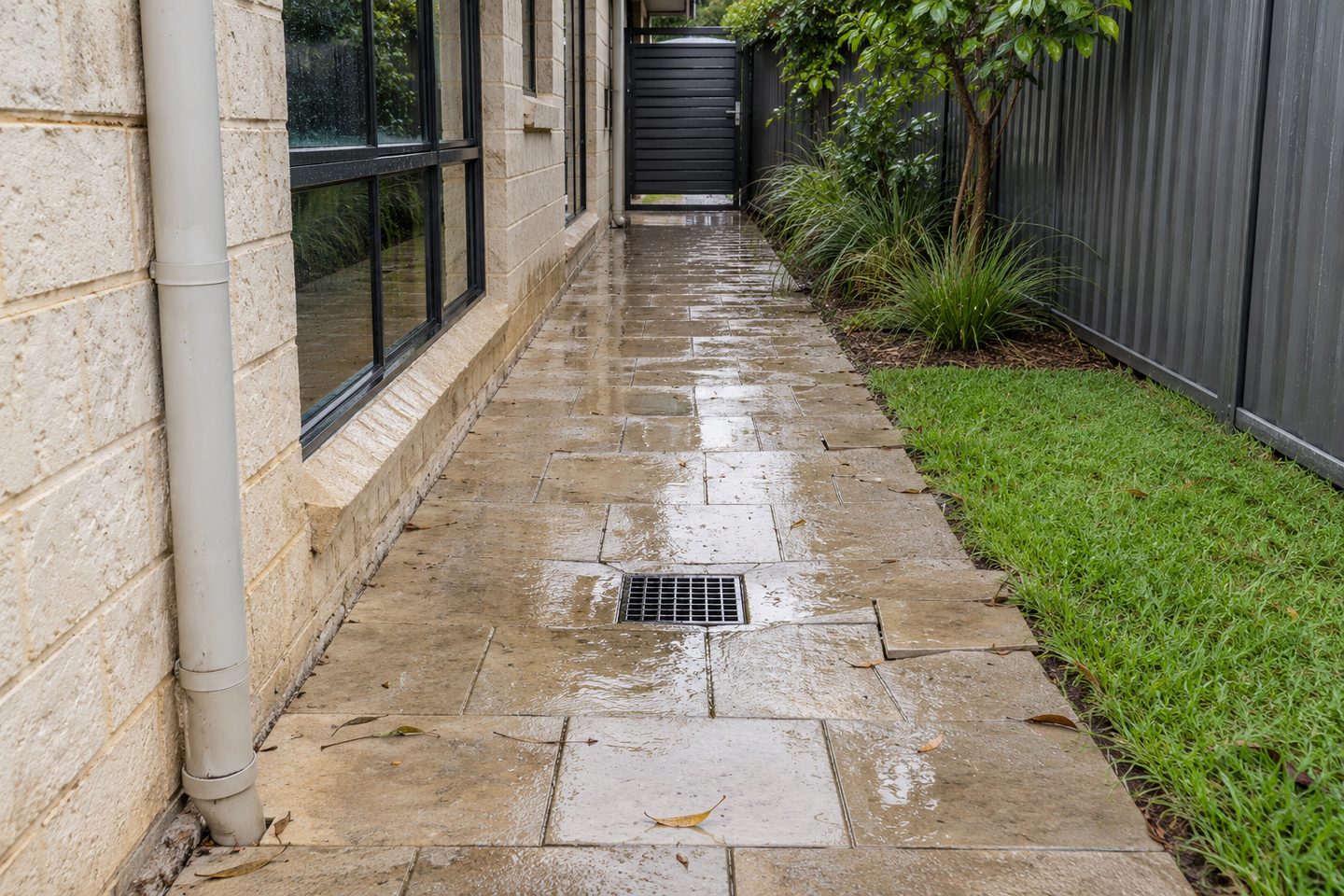
Affected area: mark the runoff track and the dip
Note where water enters the affected area and how long it stays. Add visible covers, channels and downpipes to your sketch, including areas that should stay clear.
The two issues can reinforce each other: the dip collects water while a nearby leaking pipe continues to disturb the ground. Look at both routes before selecting work.
What to check at the property
Surface movement: identify the connection below
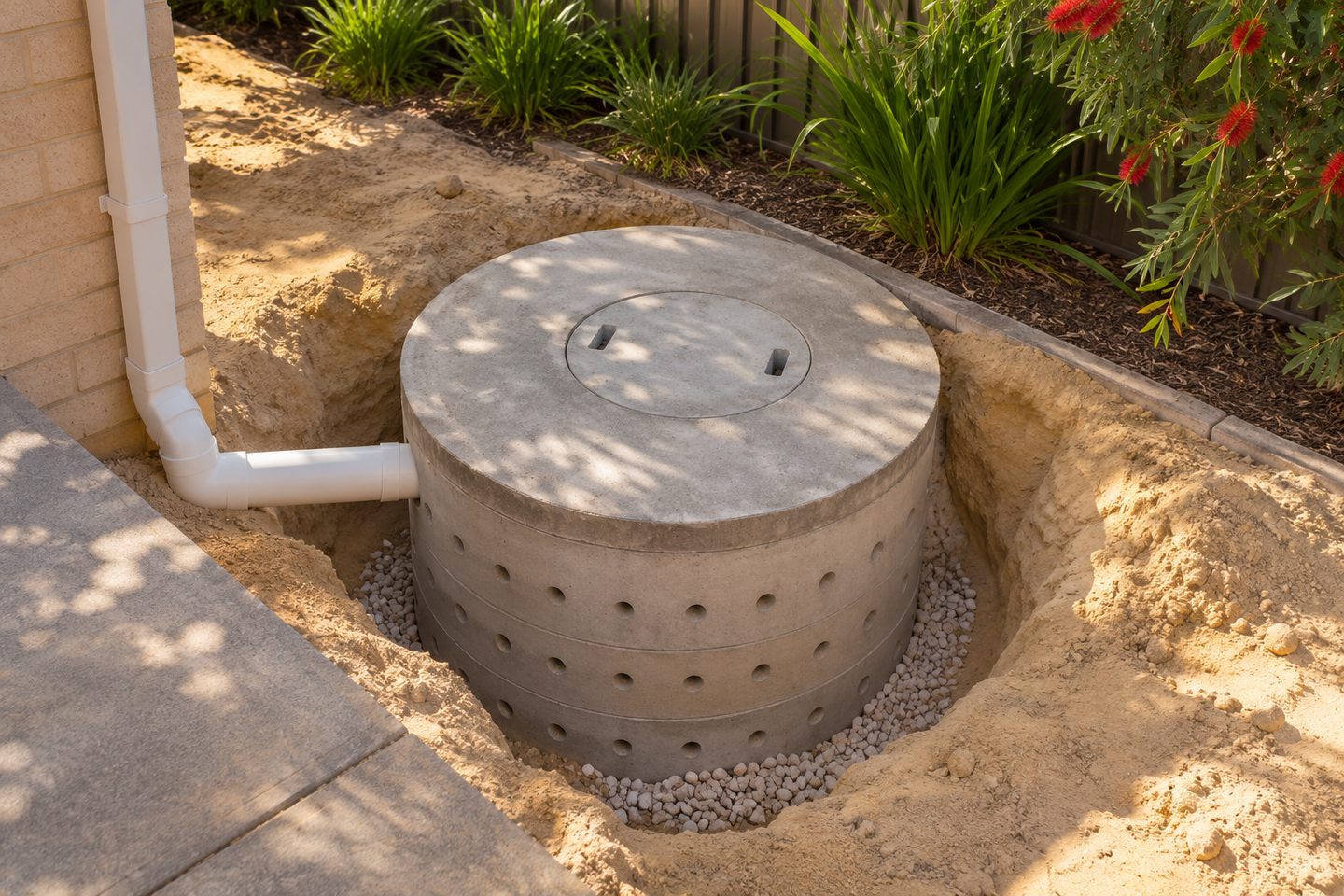
Have a provider assess whether the nearby chamber or pipe is related. Surface movement by itself does not identify the failed component.
Plan paving repairs around the finished fall
Mark the intended fall for the paving repairs and identify the low point that receives the runoff. Compare that line with the route under the surface before reinstating the affected area.
Related soakwell and drainage guides
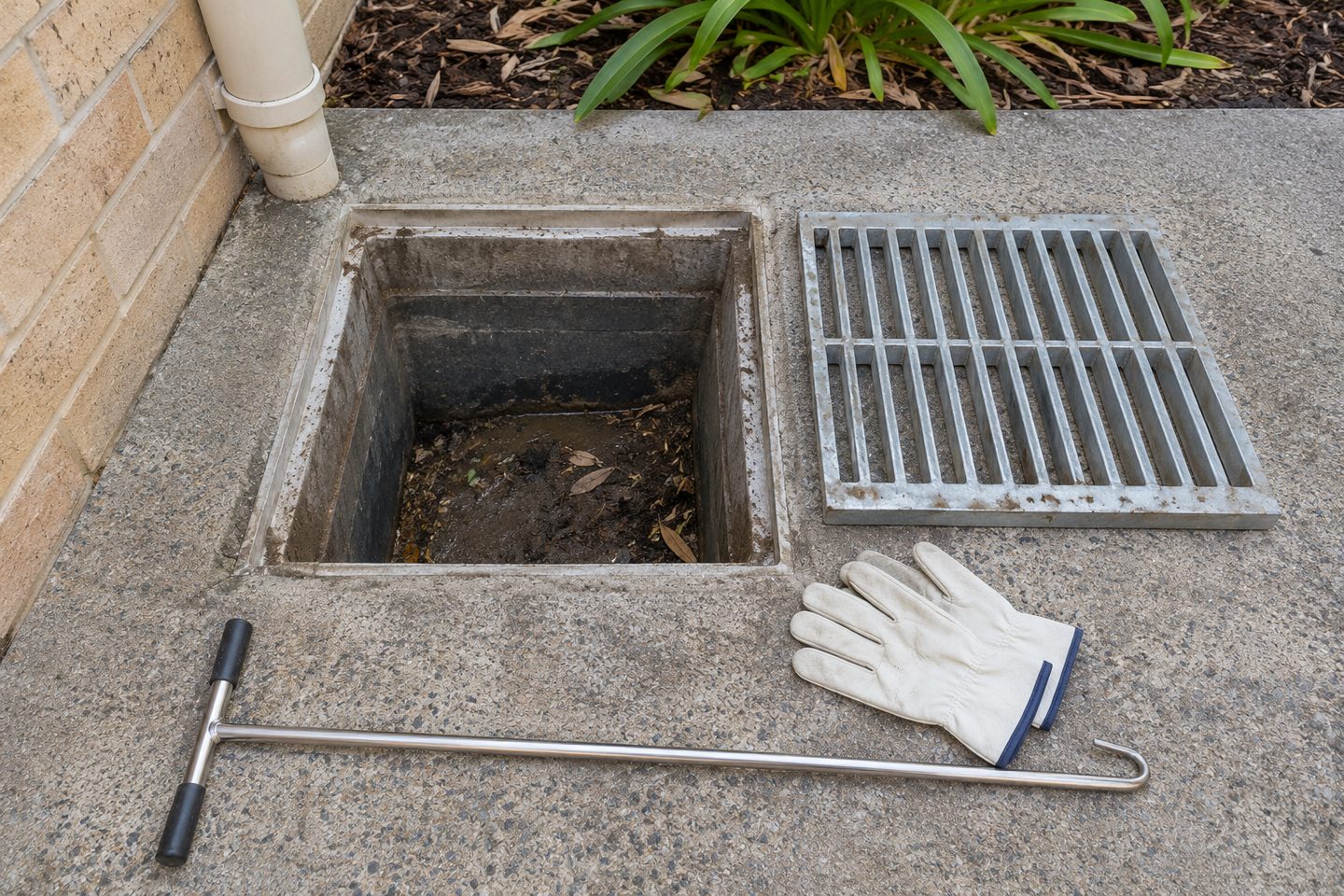
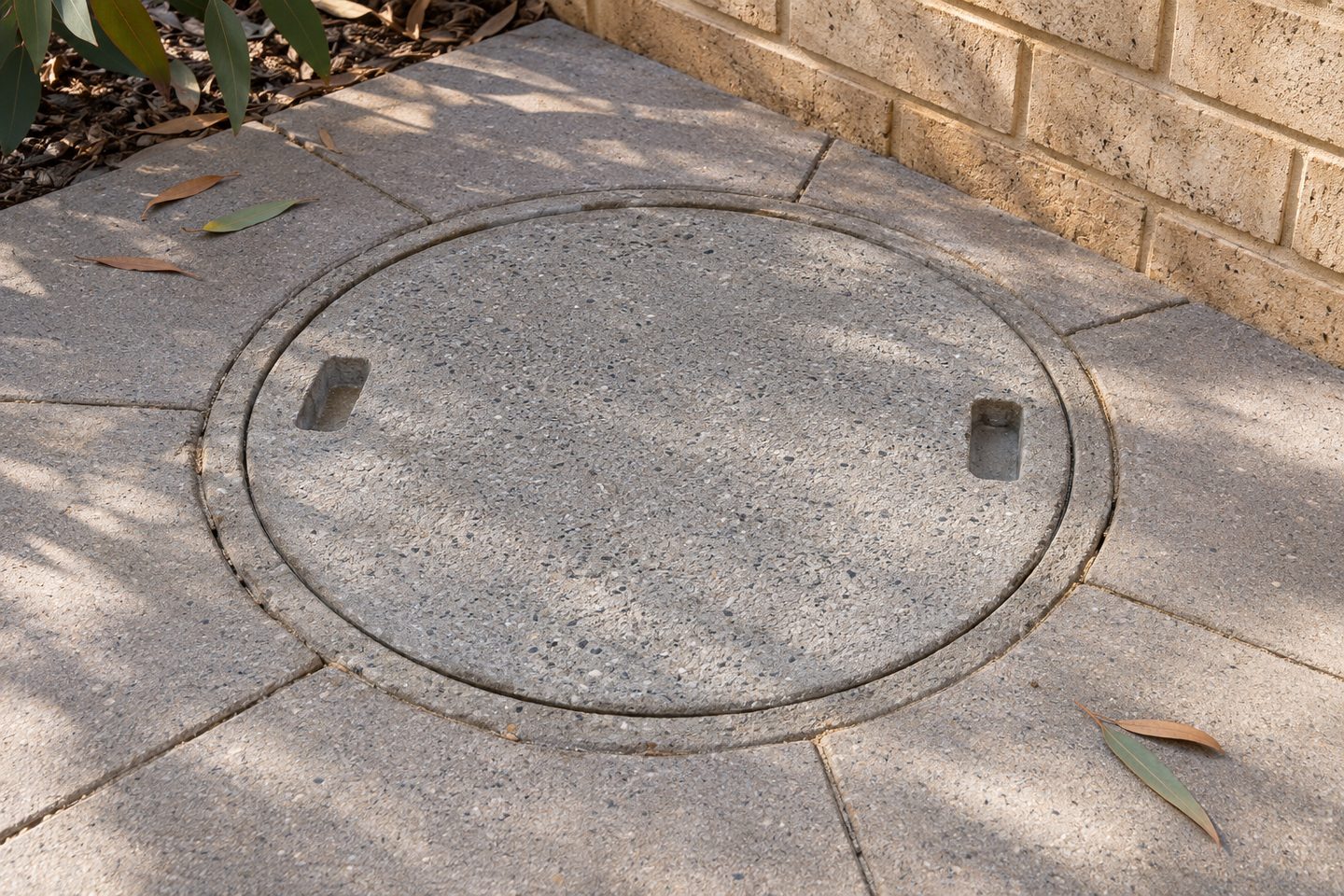
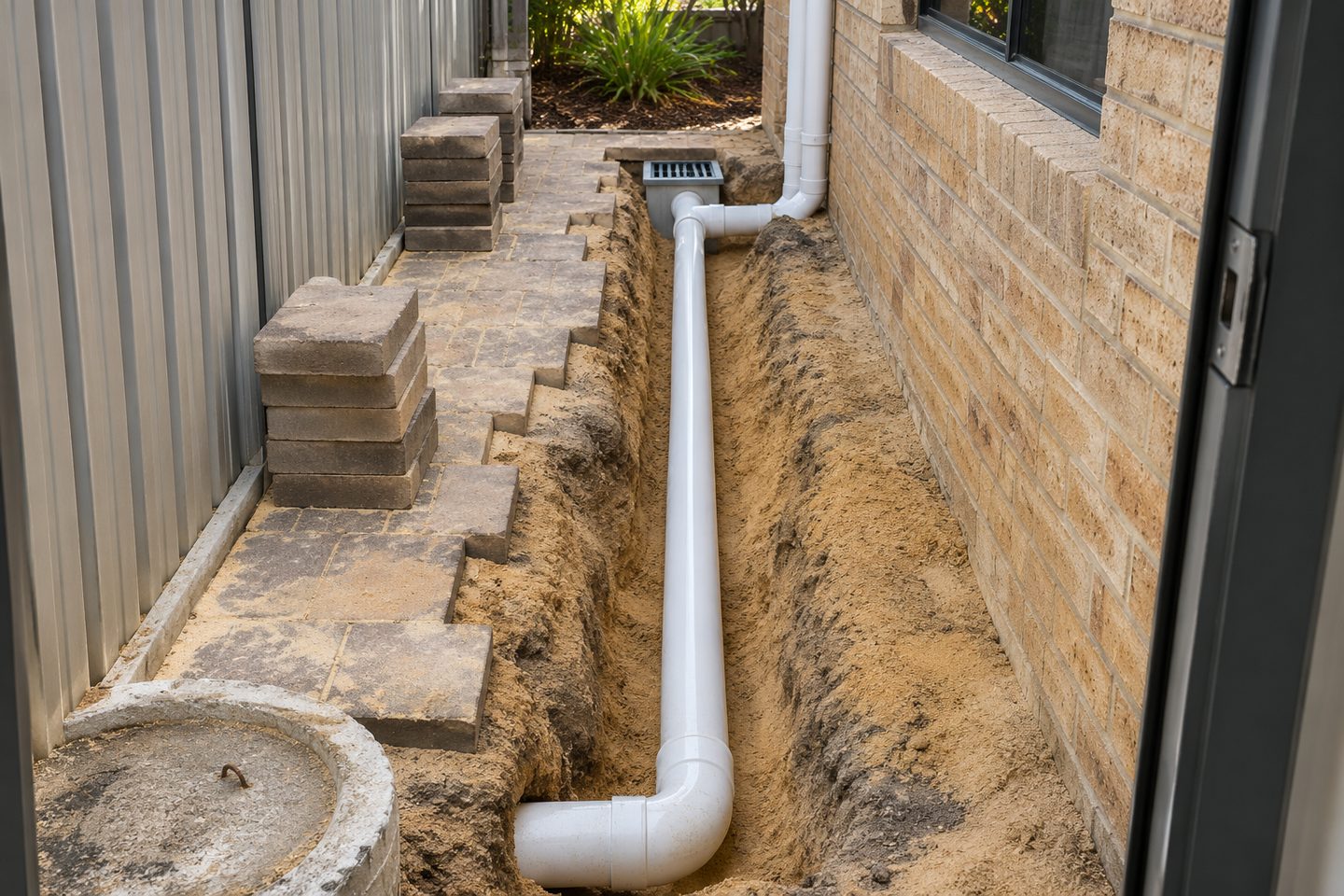
Buried route: agree the finish and maintenance
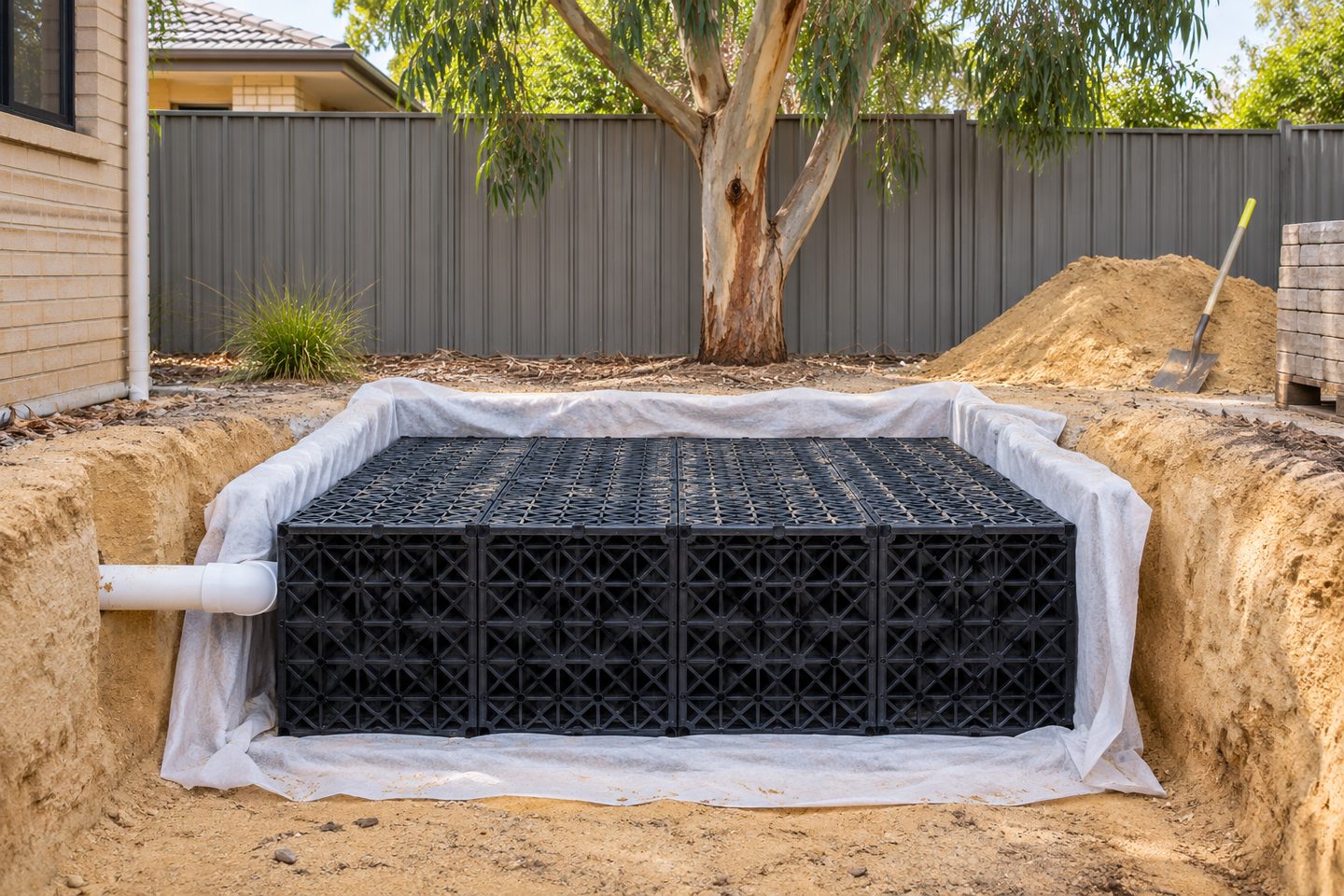
If the ground is repaired, check whether the reinstated falls guide water away from the area. Keep required access to the buried route and any cover.
Sinking paving and surface runoff: practical checks
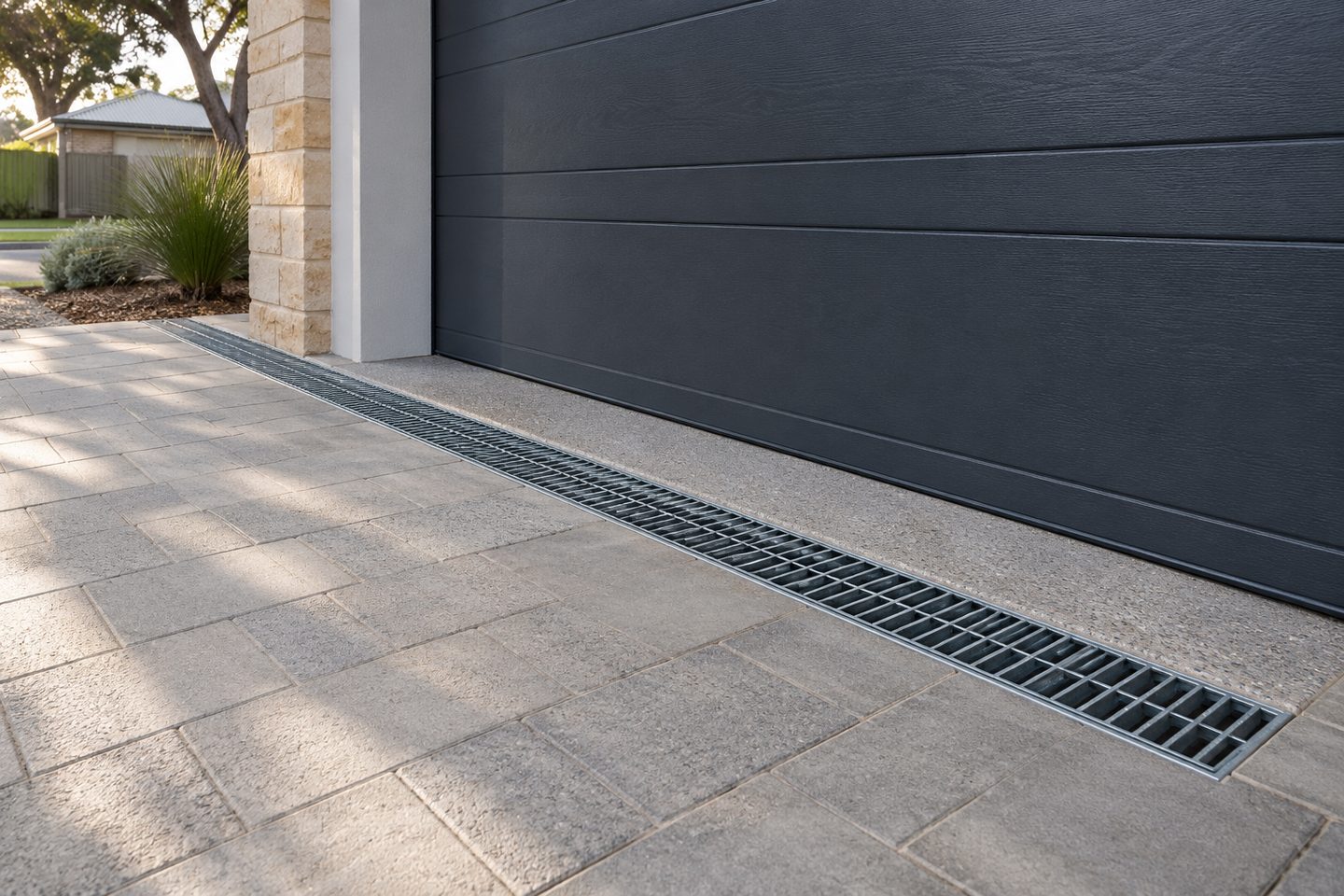
The inlet: when does re-levelling change how stormwater enters the drain?
Re-levelling can move the surface low point away from a grate or create a trough against a wall. Compare the old problem route and proposed falls before final reinstatement. Ask how water from a downpipe or larger storm would travel if the inlet cannot receive it.
Get the details together
Use the enquiry form to see which details help describe the site and the work.
Frequently asked questions
Should paving be re-laid to the exact same fall?
Check where the old fall sent runoff. The finished levels should support the drainage plan, not reproduce a known collection problem.
How do I check whether altered paving sends water back to a sunken area?
Photograph the path water takes across the pavement before and after rain and mark where it collects. Ask the provider to compare the reinstated levels with the intended collection route. A repaired chamber still needs paving that directs runoff to the right inlet.
Where should I mark the low point on a paving repair drawing?
Mark the lowest visible point on the paving repair drawing and show which side runoff approaches from. Add the nearby threshold, grate and any accessible cover. Ask the provider to compare the surface levels with the buried route before agreeing how the paving should be reinstated.
Can a driveway drain still work if water flows past the paving dip?
Water can pass through a working driveway drain while some runoff still reaches a paving dip from another direction. Map the approach to the dip and to the drain separately. Ask the assessor to check whether surface levels have changed and which connection takes each flow.
What should be recorded when paving falls are altered around a soakwell?
Keep a photo and sketch of the revised paving falls, collection points and access cover after the soakwell work. Mark where the surface sends water in heavy rain and which edge may direct it elsewhere. Keep the record with the drainage drawing for later inspection.