Stormwater planning south of the river
Perth, Western AustraliaFor stormwater planning south of the river, compare finished levels, access and the intended outlet.
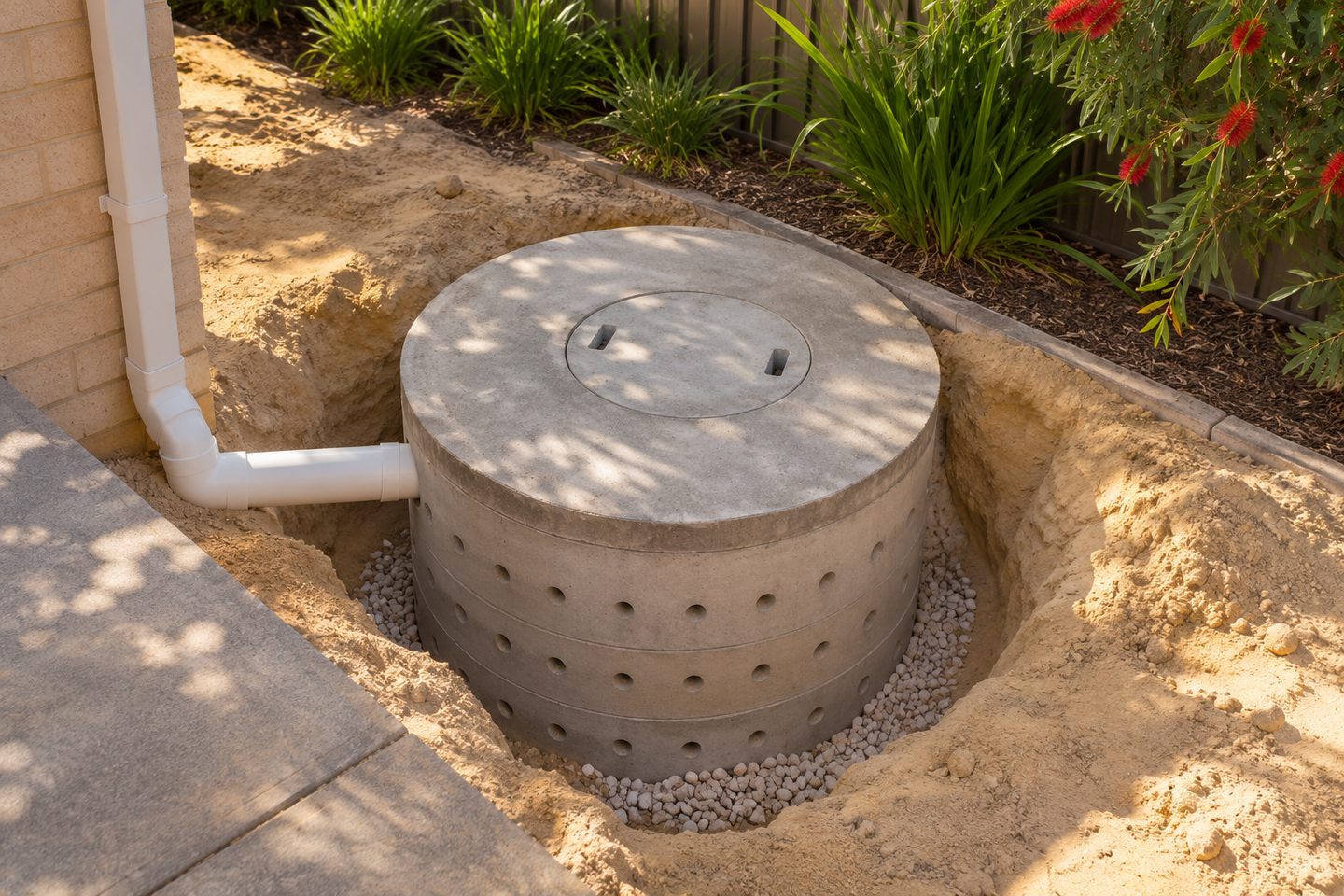
Surface route: look for water trapped by the finished levels
Walk from paving or lawn to the nearest inlet. Note steps, door thresholds and points where boundary walls change the surface route. Use photos to show whether the trouble happens at one loading point or across the whole yard.
A southern-suburbs property can sit on a finished lot with little room to alter a driveway, or on a development where the surfaces are still being set. The right first question is where runoff is supposed to go under the approval for that particular address.
What to check at the property
Identify the approval that controls the outlet
Find the drainage drawing and any relevant development conditions. A street inlet near the property does not establish a right to connect. Ask the local government what information it needs and whether an existing arrangement can be altered.
Track new roof area and existing hardstand separately
Show which roof area feeds the planned branch and which part of the driveway or path reaches a pit. This makes it easier to see where the two flows meet and how to inspect that point.
Related soakwell and drainage guides
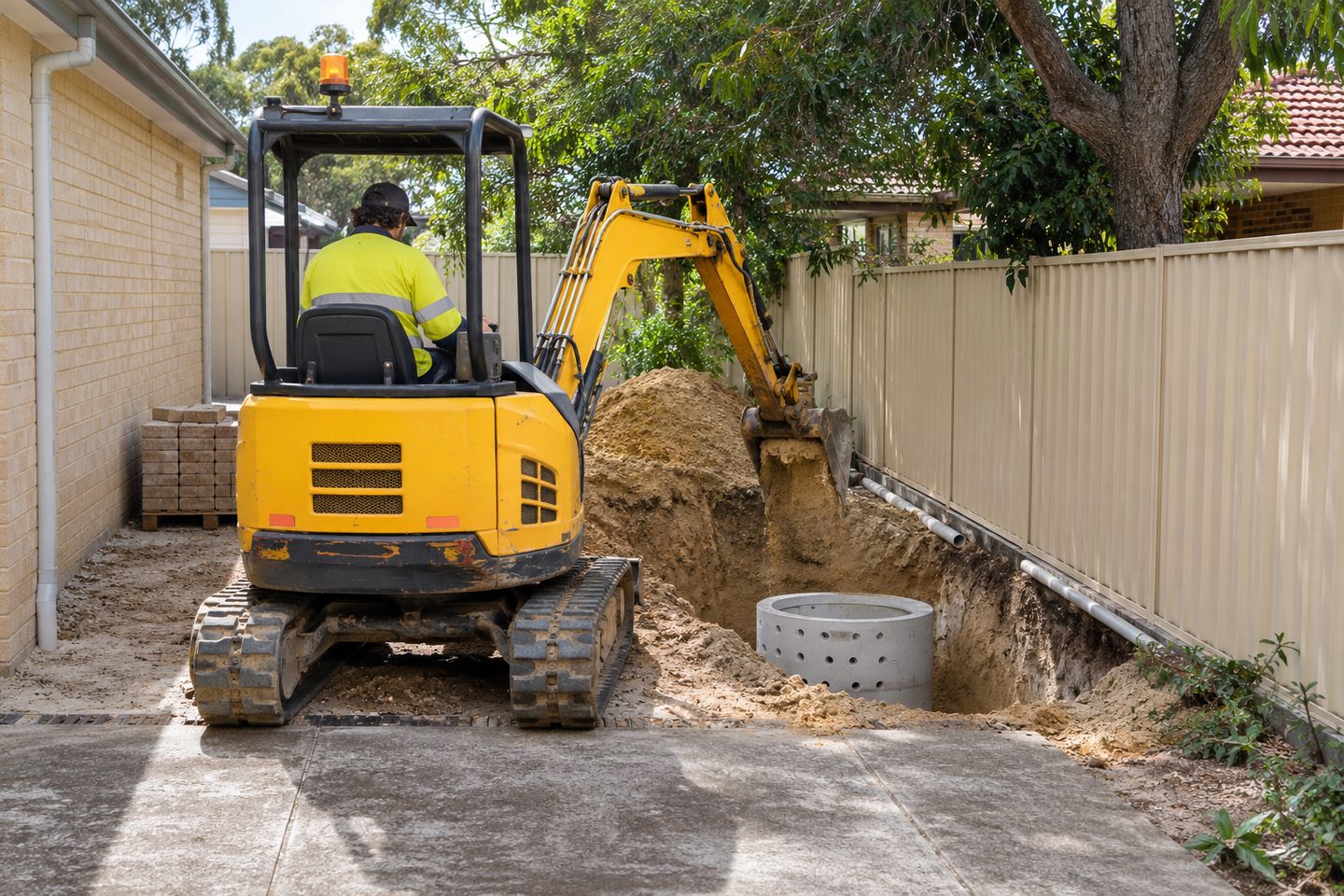
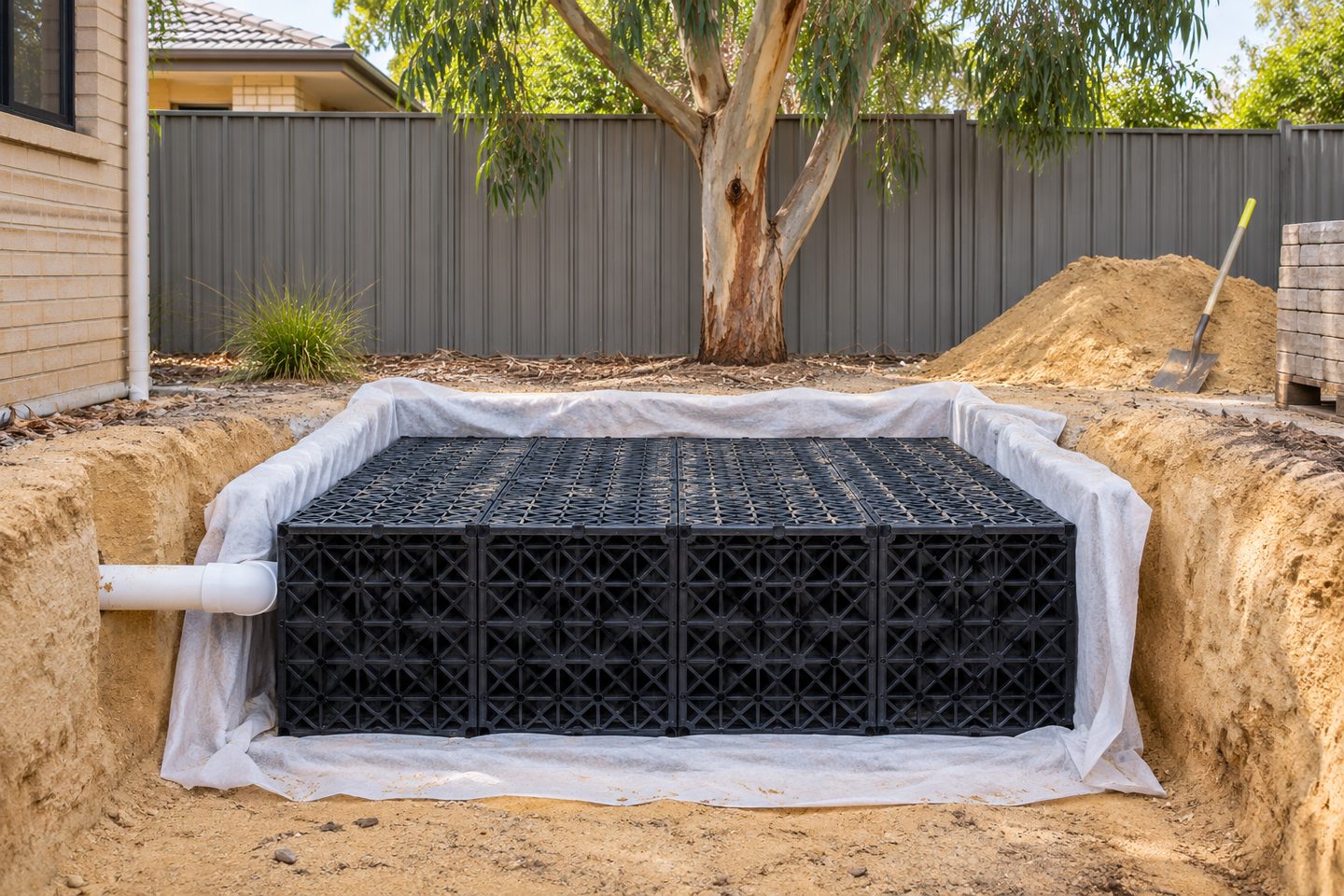
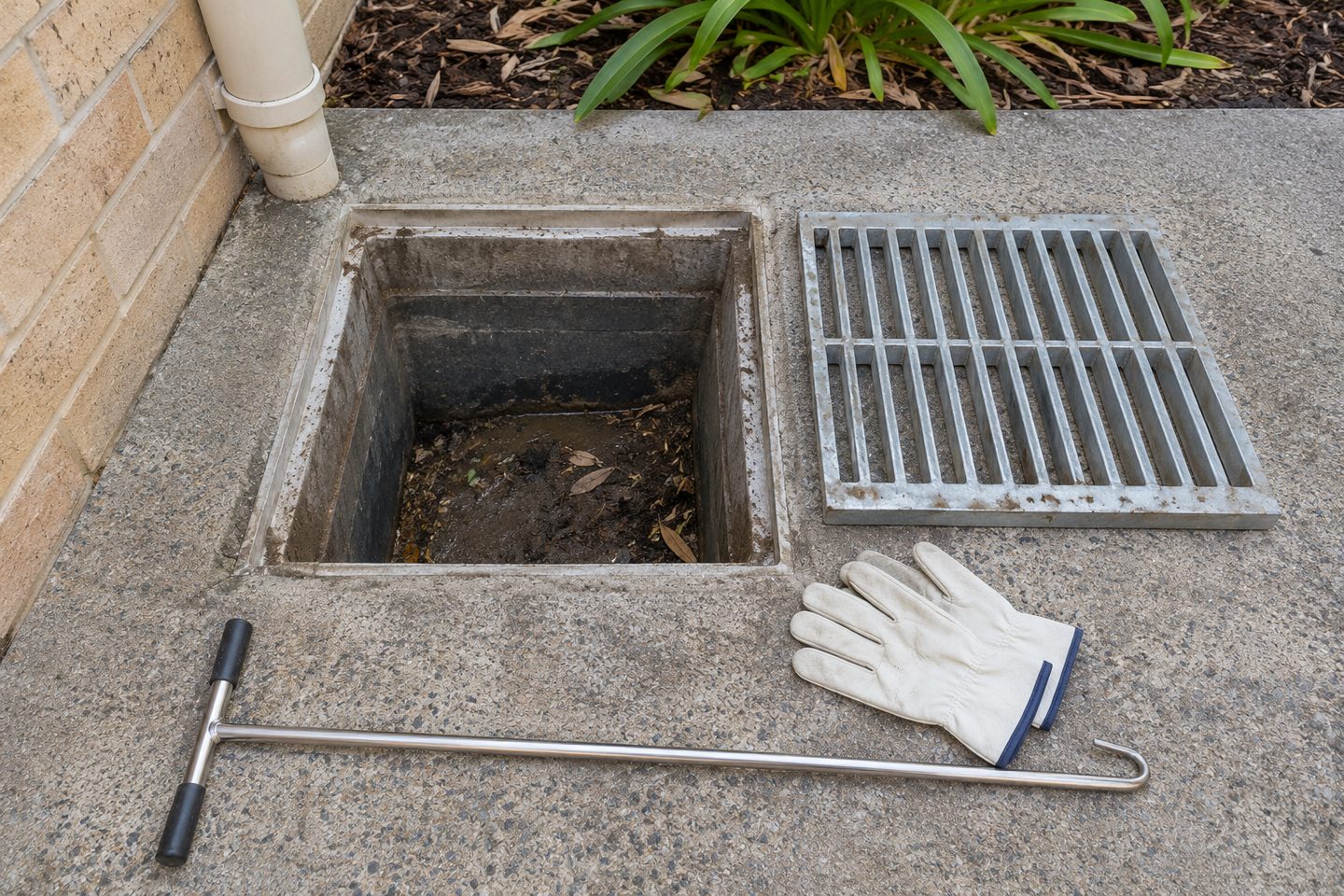
Reinstatement: include access in your written scope
Show the location of gates, carports, side passages and areas that cannot be cut. Ask the provider how access limitations affect the proposed network and whether reinstatement is included.
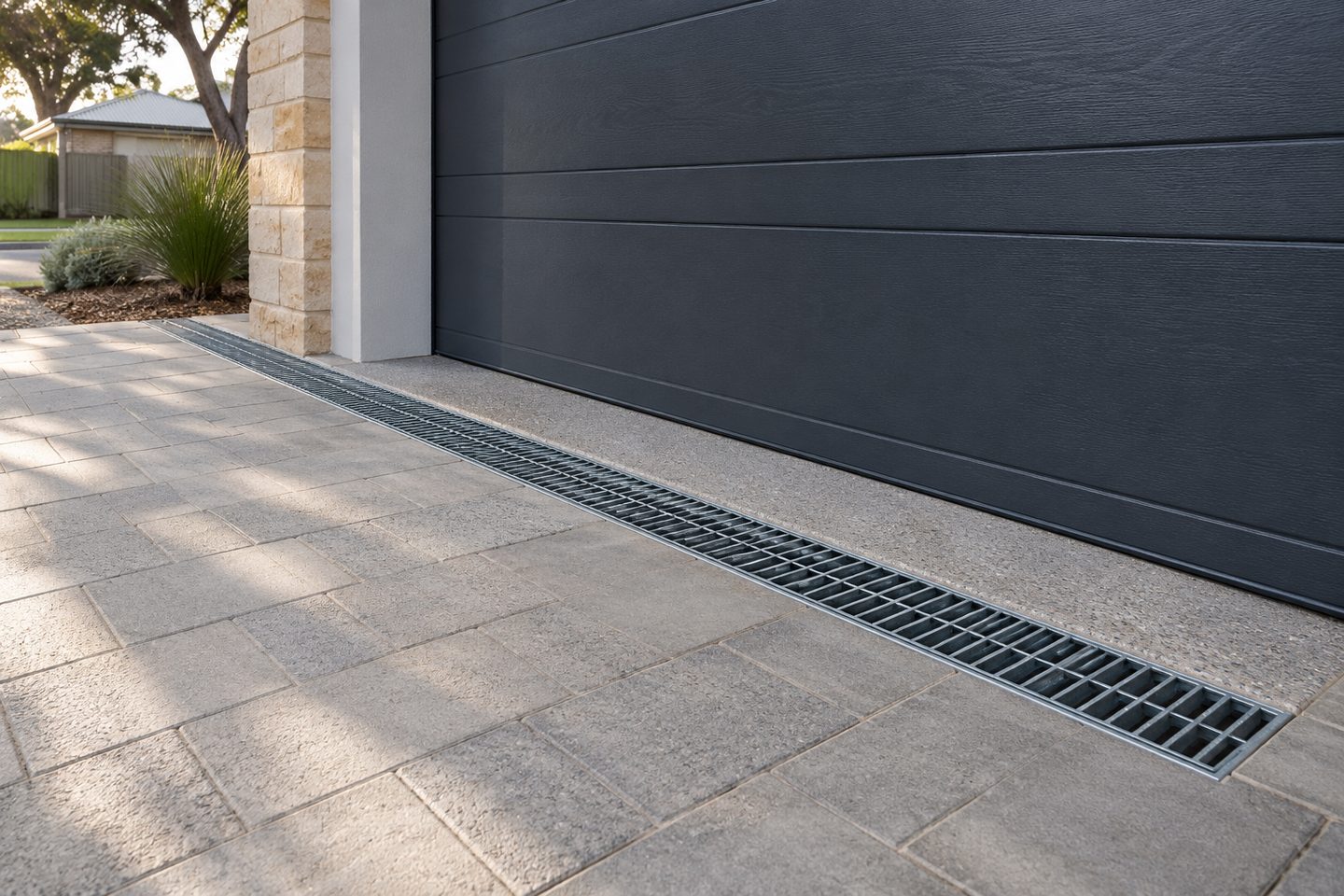
Stormwater planning south of the river: practical checks
Downstream route: why verify the discharge point on a south Perth lot first?
A proposed inlet is only useful once the downstream route has a suitable destination. Find the approved or recorded arrangement, then mark where the surface water would enter it. Ask about a specific address and proposed work rather than inferring permission from a street pit or a nearby property.
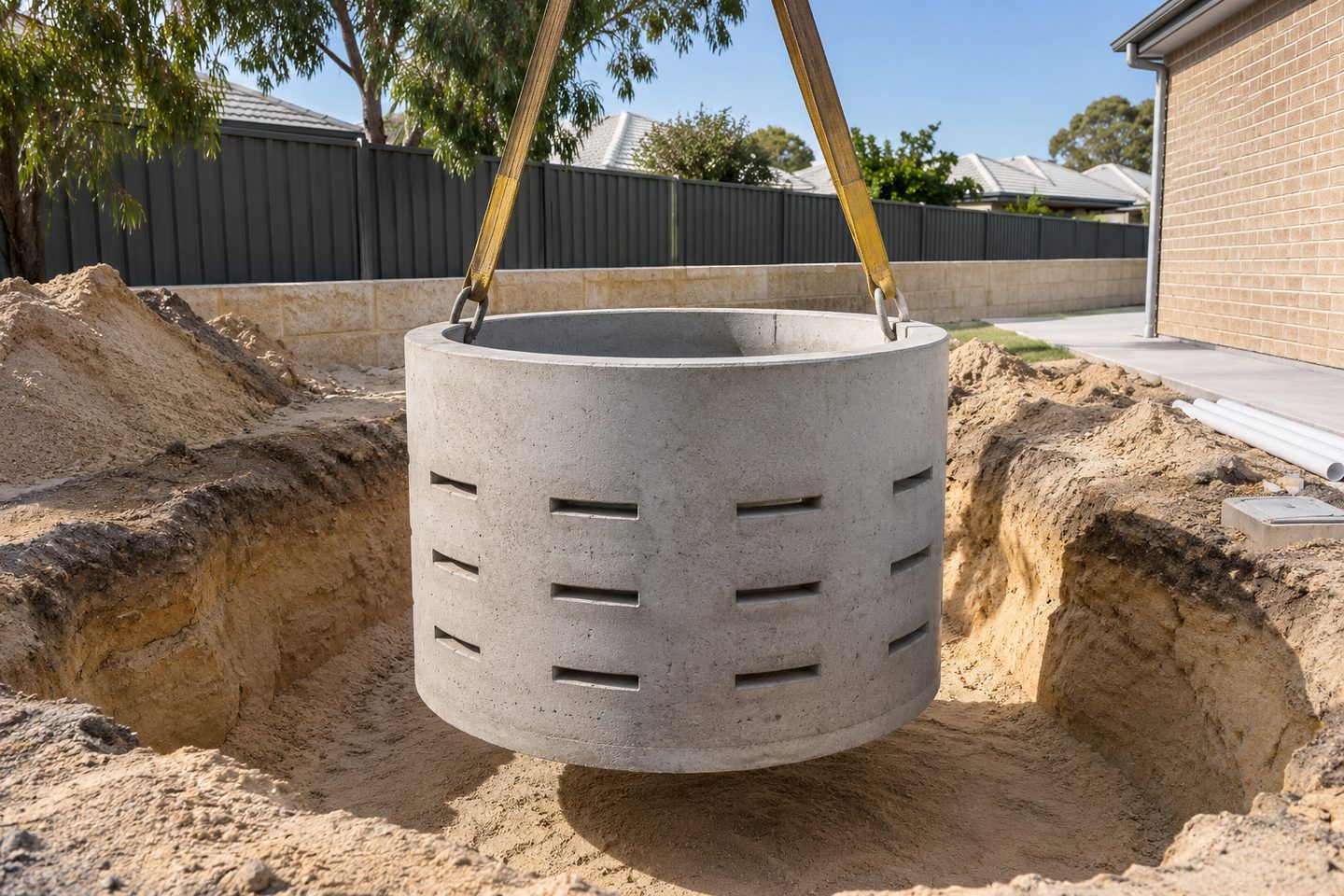
Get the details together
Use the enquiry form to see which details help describe the site and the work.
Frequently asked questions
Can a driveway drain connect to the pit in the street?
Do not assume a connection is allowed. Confirm the existing outlet and applicable approval requirements for the property.
Can I retain a southern suburb driveway outlet when paving is changed?
Have the destination and suitability of the existing outlet checked, then show its proposed level on the new paving drawing. Confirm applicable approval conditions with the property details. Moving or raising the collection point can affect performance even when the downstream pipe is unchanged.
What should I record where a southern Perth driveway traps runoff?
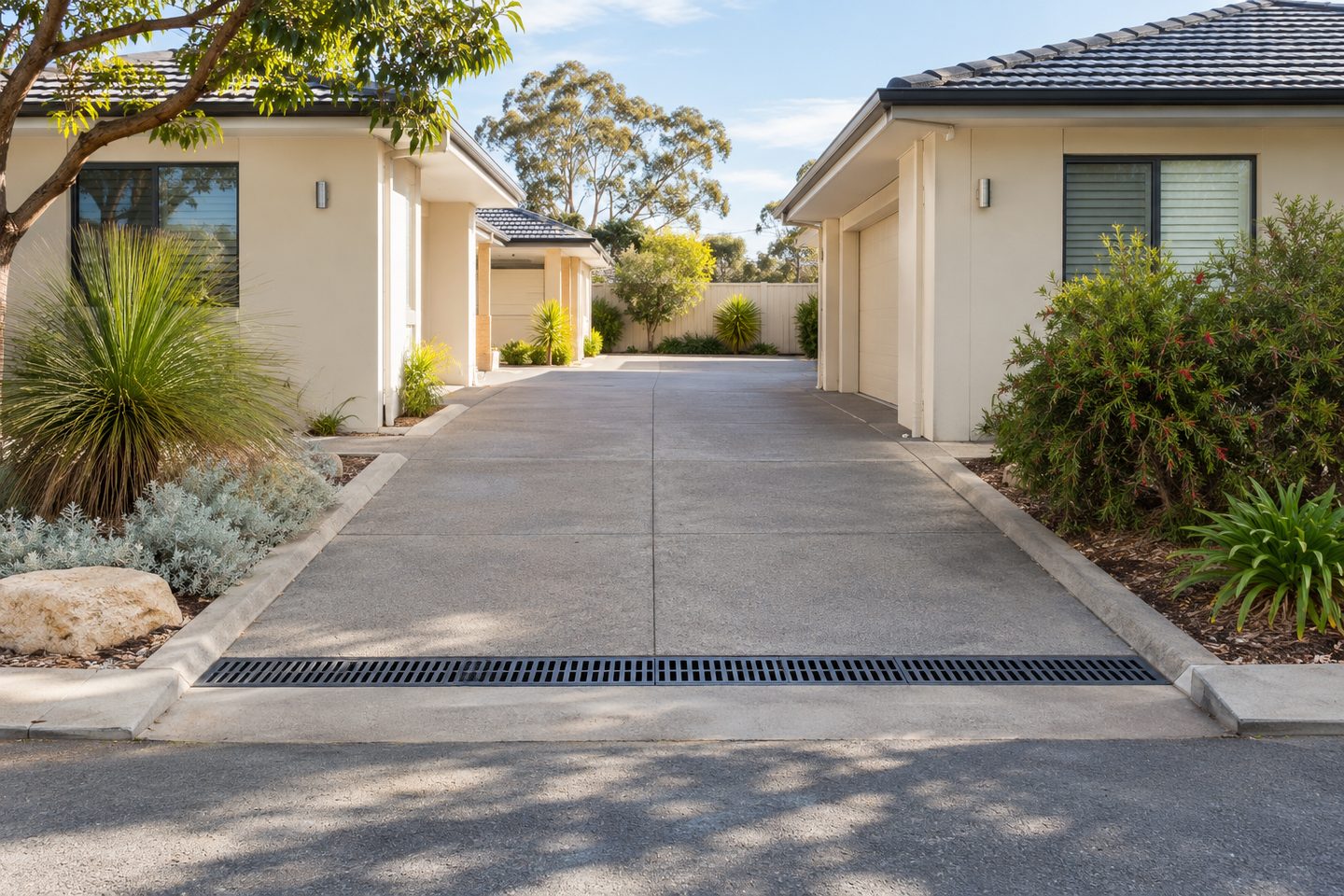
Mark the first low point on the driveway, the garage threshold and any edging that stops water from leaving the surface. Show which grate or pit would receive the runoff. Ask the drainage provider to compare the finished levels with the outlet confirmed for that property.
Which records help confirm an existing southern Perth drainage outlet?
Start with the property drainage plan and any record of earlier works or approval that identifies the outlet. Mark what can be seen from the site and label the route that still needs checking. Ask the relevant provider or authority what applies before assuming the outlet can be retained.
How should reinstatement protect drainage access on a south-of-river site?
Show the inspection covers, pits and approach routes on the reinstatement plan before agreeing the finished surface. Ask who will leave these points reachable after paving or garden work. Record their final locations with fixed references so a provider can find them when drainage needs checking.